Press Play Before Reading – Falling in Love with Bonnie Raitt
Unreleased live performance from the 1981 No Nukes Stop Diablo Canyon benefit concert

Press Play Before Reading – Falling in Love with Bonnie Raitt · Aggrovox
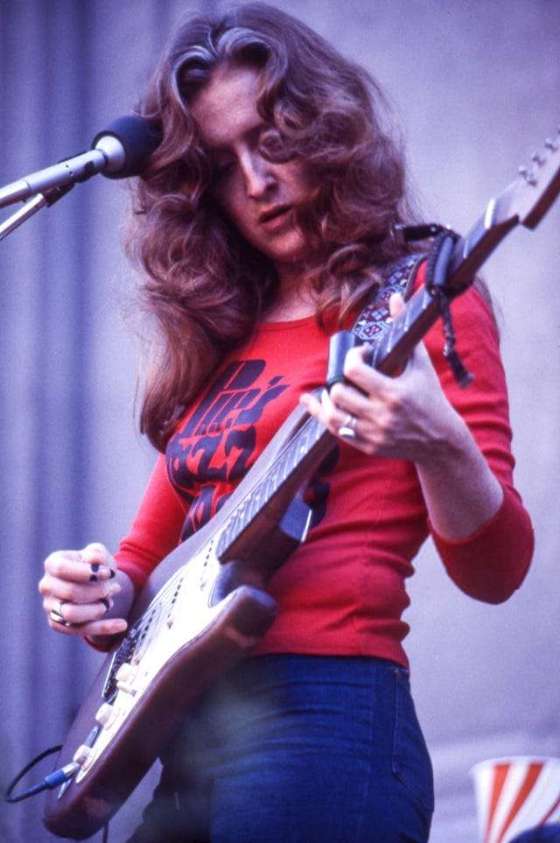
Press play on AggrovoxThe original post on Substack, with the full audio playerI can’t remember exactly when I fell in love with Bonnie Raitt. I can tell you about the exact moment that I knew I was in love. Avila Beach, on a cold, foggy, and breezy day in 1978. Protest speeches hang in air with the fog and the pot smoke. Bonnie sings Angel from Montgomery solo acoustic and alongside her physical beauty the deep soulfulness of her voice is inescapable.
Through the soft light and fog covering the beach Raitt is a vision. Her red hair transforms the misty grey tableau with a riot of color.
She’s shivering in the cold on the temporary stage. She’s the damsel in distress, and the older woman! There’s actually less than a decade between our ages but in my delusion, this is my Mrs. Robinson moment. From the side of the stage, I offer her my ratty college-trip-to-Mexico blue and white rough knit cardigan. She looks down, smiles and thanks me, but declines. Rejection stings but only make the heart grow fonder.
I don’t really know how many times I’ve seen her perform live. Dozens probably. I may have seen her father John Raitt before I saw Bonnie. I was a high school kid attending events in the music department at the University of Redlands, blocks from my high school. John is a Redlands alumnus who is very involved in the department. He has a booming, unamplified voice in the school’s chapel. Side note: the chapel is used to cut more than one live recording. It’s a big room, and I think made of limestone, as is the fashion for well-heeled buildings in the 1920’s.
Bonnie inherits more than a voice from her father; she inherits a commanding yet natural stage presence. She also inherits his reputation for giving back to the community. I associate Bonnie with every single protest, environmental and social justice cause in Santa Barbara that I supported as a teen - right through adulthood.
The Headliner
On April 23, 1981, when Raitt headlines the Stop Diablo Canyon benefit at the Arlington Theatre, she isn’t the newcomer harmonizing with Jackson Browne or Graham Nash. She shows up big, with a full band featuring an hour of material. The marquee and the ticket stub aren’t accidental.
Her set is the real deal: electric, rehearsed, a working band doing what they do every night on tour. Guitars (rhythm and lead), bass, drums, piano, what sounds like two horns, and two or three backup vocalists. A nine-piece band that makes a professional noise.
Twelve songs of the 1981 set survive on the tape (see the prior Aggrovox article about the show’s solo performances by Jesse Colin Young, Graham Nash, and Jackson Browne). Only one song is her own composition, Give it Up or Let Me Go. The others are a guided tour through the records Raitt loved before she ever made any of her own.
Three of the songs she curates on that blustery April night in Santa Barbara provide an object lesson in how to make an audience fall in love with you.
Angel from Montgomery
Everyone knows one Bonnie Raitt song that isn’t even a Bonnie Raitt song, it’s a memorable John Prine tune he wrote for his self-titled 1971 debut album. His aim, he has said in interviews, was to write from inside the head of a woman who “feels older than she is.” He was twenty-four when he wrote the song and still delivering mail on a Chicago postal route.
Bonnie Raitt and a joyous John Prine perform “Angel From Montgomery” live at the Farm Aid concert in Austin, Texas on July 4, 1986 – video credit Farm Aid
The song comes midway through her set. Raitt’s voice is warmed up, but still with plenty of headroom left for the night. Her range, phrasing, and the emotion behind it are masterful, even though it’s ‘just’ a benefit concert.
Raitt started singing Angel from Montgomery while touring with Prine in the early 70’s. She records her version on Streetlights, her 1974 album. Asked once why the song mattered to her, Raitt didn’t hedge: as a young feminist, she said that the idea that a young man could so completely inhabit the interior life of a woman trapped in a thankless marriage simply floored her. Decades later, inducting Prine into the Songwriters Hall of Fame in 2019, she called it, plainly, the song that had “meant more to my fans and my body of work than any other” she’d ever recorded. Of every song she’s covered in a fifty-year career, this is the one she’s performed live more than any other — more than 470 times and counting, according to Setlist.fm.
Prine dies in the spring of 2020 following his Hall of Fame induction. He falls ill with COVID on March 27, and dies on April 7 at just seventy-three years old. Prine is one of the first major American musicians lost to the virus, in a month when most of the country is still learning to say the word “pandemic.” The Recording Academy later releases a recording of “Angel from Montgomery” with proceeds going to the MusiCares COVID-19 Relief Fund. The song Raitt made famous is fittingly repurposed as a benefit to help fight the thing that killed the song’s writer.
Raitt has an unparalleled record of generosity participating in benefit shows. She is credited as a cofounder of the groundbreaking five-day MUSE anti-nuke music festival at Madison Square Garden in 1979. The lineup - from Bruce Springsteen and the E Street Band to Ry Cooder - reads like a who’s who in rock and roll history of the decade.
Think (Just in Case)
If “Angel from Montgomery” is the signature, “Think (Just in Case)” is the deep cut — the song that shows Raitt is a student of the full spectrum of rock and roll traditions. Jimmy McCracklin writes Think during a career that stretches across seven decades and nearly a thousand songs, four of them gold records, and almost none of them properly remembered outside blues circles. His first hit, “The Walk,” is covered by the Beatles during the Let It Be sessions.
McCracklin spends much of his later life fighting for writing credit. He maintains for decades that he wrote “The Thrill Is Gone” years before B.B. King ever recorded it and turned it into his own signature song — only to see it sold off without proper credit before McCracklin understood what copyright protection even means.
King himself eventually acknowledges the authorship on camera, decades too late to matter financially. That’s the songwriter Raitt chooses to feature in her own set — not a random jukebox pick, but a deliberate nod to a journeyman bluesman.
A Big Hunk O’ Love
The song is the Diablo Canyon show encore. A single encore by the sound of it. It’s the last song on the tape – the rocker tune at the end of the party mix. Elvis Presley takes “A Big Hunk O’ Love” to number one for two weeks in the summer of 1959. He brings the song out again for his Las Vegas Hilton residency in 1972, and it’s also on camera in both the Elvis on Tour and the 1973 Aloha TV special from Hawaii, in front of a worldwide audience that Col. Tom Parker boasts is “over one billion!” (the number was much lower, but still huge). This period is considered the physical and vocal peak of Elvis’ entire career. It’s rocker Elvis singing to the back row.
Setlist.fm documents over 60 performances of the tune in Raitt’s touring history. It’s nowhere near “Angel from Montgomery” territory, but it’s exactly what an encore is meant to be. It’s the release valve at the end of a long night of work. It’s an OG rock and roll tune that closes the show with unapologetic fun.
Three songs. A signature song that helps me discover the meaning of love, a tribute to the history of rock and roll, and a kick ass party tune to finish. It doesn’t feel like a random selection; more like an invitation to fall in love, to respect the past, and to have a damn good time doing both.
Encore
The set list.
For more about the Stop Diablo Canyon benefit show, and about the Stop Diablo Canyon movement and the larger No-Nukes protests in the 1970’s, please read my companion article: “Press Play Before Reading: No Nukes Stop Diablo Canyon Benefit Concert Live Recording.” The article features rare solo acoustic performances from Jesse Colin Young, Graham Nash (one of the only live versions of “Song for Susan” I can find), and Jackson Browne.
The first article features solo acoustic performances from Jesse Colin Young, Graham Nash (including the earliest found live version of Song for Susan), and a powerful Jackson Browne anti-war ballad
Get Aggrovox by email
Live tapes, unreleased concerts and the stories behind them. Free, in your inbox.
Free on Substack · Aggrovox