Press Play Before Reading - Lou Reed: Exorcising Darkness
Never-released live recording of Lou Reed in Nice, France

Press Play Before Reading - Lou Reed: Exorcising Darkness · Aggrovox
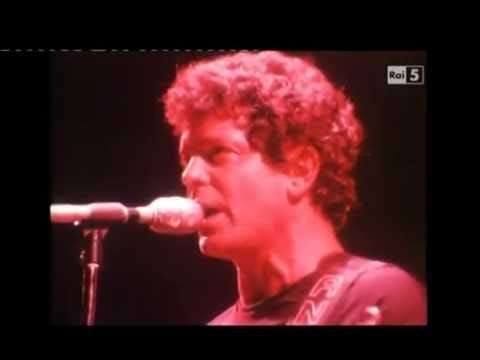
Press play on AggrovoxThe original post on Substack, with the full audio playerLou Reed, Florence, Italy. June 14, 1980, in the Parco della Cascine more than 10,000 people share a two-hour Lou Reed performance on a warm night in a park-like setting. Two weeks later Reed plays for fewer than 2,000 in the Theatre de Verdure in Nice, France, a faux Roman outdoor amphitheater built in concrete five hours up the coast from Florence. Reed and his touring band — Michael Fonfara, Chuck Hammer, Stuart Heinrich, Ellard “Moose” Boles, and Michael Suchorsky play, per the best available documentation, the last night of the European leg of the Growing Up in Public tour. No official recording of that show exists. This is the unofficial tape.
4 Songs - Twenty-one Minutes Thirty-Six Seconds
Reed gave an interview in 1971 describing songs like “Heroin,” and “Walk on the Wild Side.” He said they were meant to exorcise darkness, not glamorize it. He also said his song, The Bells, is “about suicide, but not a bad suicide.” Reed was a notorious interview for nearly his entire career.
Exorcising darkness is a tidy phrase, the kind that gets quoted because it sounds like he’s explaining himself. What’s on this tape suggests something messier and more interesting. Across these four songs, “exorcising darkness” doesn’t look like one fixed thing night after night. Sometimes it looks like turning an artist’s biggest commercial success into the shortest song in the set; when a song has been performed enough times that it starts being a job. Sometimes it looks like what happens when a song fixing counter culture’s power over violence becomes a power anthem. And sometimes, on a good night, something closer to the thing itself happens – out where the artist chooses to stay in the dragon pit where creativity happens.
On this night, performed live “Coney Island Baby” loses its dedication to the woman who inspired the song. The verse that begins the song and makes it a personal diary entry about Reed’s dream to join the football team (and win the girl?), is gone. At the end of the song the shout-out to ‘Rachel Humphreys and the kids at P.S. 192’ is simply gone, replaced by a guitar solo. “Vicious,” always a cultural meme based on the wit of Andy Warhol, gets bigger and meaner. “Walk On the Wild Side,” Reed’s hit is dispatched at a breakneck pace, like something he wants behind him. And on “Heroin” - the longest track in the set list by a full two minutes - the song becomes the rush and the comedown, exactly as the writer and his dragons intended.
The tape documents four songs and four different exorcisms on the last night of a tour in a foreign country; Reed succeeds and the audience wins.
Press play. Then keep reading.
Coney Island Baby, Who it was and what it was
Built from a poem Reed wrote in 1971 for The Harvard Advocate, originally titled “The Coach and Glory of Love,” the song is a love letter to his then-girlfriend Rachel Humphreys, dedicated to her and “all the kids at P.S. 192” in its closing lines. On the album the song is a quiet, nearly acoustic confession. None of that survives here. The performance starts with the second verse, “When you’re all alone in your midnight hour” skipping the first two verses and the bridge. The Nice performance ends with the ‘glory of love’ refrain and impressive guitar solos. No dedication at all to Ms. Humphreys and the kiddos.
The Nice tape hits much differently than the studio version. Soaring electric guitars fill the space where the diarist’s feelings once were. A documented 1984 performance with guitarist Robert Quine shows Reed taking the song in a harder, more theatrical live direction, screaming through the ‘glory of love’ refrain. The Nice performance is an interesting point in time in the song’s arc: a private confession slowly changes through time and performance into something that satisfies a crowd.
Vicious, You hit me with a flower
The song’s origin story is one of Reed’s most-repeated legends.
Andy Warhol suggests the title for the song, and when Reed asks what kind of vicious he means, Warhol answers with the image that became the opening line. “You hit me with a flower” is an instant meme, and Reed says he writes it down nearly verbatim. A generation understands the lesson that the power of culture outsmarts violence to effect change. On the album the song is glam-pop, and under three minutes. Live at the Theatre de Verdure, it runs 4:10 and it’s anthemic; filled with power chords. Reed leans into a more urgent, even menacing vocal register. He practically snarls, “Baby, you’re so vicious” by the end of the first verse.
The ‘angry’ version of the song isn’t new for the 1980 tape. A live version from December 1973 (released on Lou Reed Live) runs 5:55, nearly double the studio length. When Reed plays “Vicious” on the last night of the 1980 European tour, the song has apparently settled into a role as a designated live showcase number - a song built for big performances, and one that keeps getting bigger, not smaller as the years pass.
Walk On the Wild Side, Hi Bruce
Reed’s most successful chart hit reaches #16 in the US and #10 in the UK. “Walk On the Wild Side” is a Bowie/Ronson-produced guided tour through real people from the Warhol Factory: Holly Woodlawn, Candy Darling, Joe Dallesandro, Jackie Curtis, and Joe Campbell. On the album it’s a catchy bassline with airy backing vocals that turns it into inescapable radio furniture. None of that is present in the 1980 Nice version where it runs a brisk 3:10, much shorter than the studio cut. On the tape Reed sings the first verse in an almost Dylanesque time signature, with an out of sync cadence that seems to struggle to catch up.
There’s real precedent for Reed treating this song casually rather than reverently in concert. On “Live: Take No Prisoners” (1978), he talks over his own biggest hit mid-performance to riff about Bruce Springsteen being in the crowd. “Hi Bruce!” The Nice tape isn’t chatty, instead it feels like he’s channeling his resentment for the song by speeding through it.
On a Monday night in Nice the vibe is more electric campfire sing-along than hip counterculture. It’s the one song of the four live versions that clocks in faster live rather than slower.
Heroin, Riding the dragon
Reed reportedly writes the song at Syracuse University years before the Velvet Underground exists and it’s famously the first song Reed ever plays for John Cale. Heroin (the song) may be a big reason the band forms at all. On the Nice tape the song is a slow build toward a crescendo, then a slowing pace and quieter tone. It’s a musical version of injecting smack, and the song does exactly what it is built to do.
On the Nice tape the song features the soaring guitars of Chuck Hammer and Stuart Heinrich. The ’67 original on “The Velvet Underground & Nico” is a different song; one is a spoken word confession and the other a full rock opera. Critics describe the changes in tempo and other effects in the song using the same language as the drug user, ‘It’s the rush and then the comedown.’
Reed’s own account of the song’s intent, given in a 1971 interview, is that songs like this are meant to exorcise darkness rather than glamorize. It’s a disputed claim that’s been argued about since the record’s 1967 release, when radio stations refused to air the song because of the drug use. The tension between a song that seems to successfully mimic the activity it supposedly condemns, regardless of the author’s professed anti-drug intent is controversial 60 years later. It deserves to be the longest track on the tape at 7:34.
Epilogue
In the set list below three songs are missing from my tape(s): Sweet Jane, Real Good Time Together, I’m Waiting for the Man. I fully expect these three songs to eventually turn up on the end of another tape.
When archiving the ‘big box of tapes’ I first found the Reed encore on the end of a Devo show recorded at the same venue. The tape that is labeled, “Lou Reed Nice” and has the ticket stub tucked in the case is a full 90 minutes. The fact that the ‘full’ tape starts at the head of the tape with Coney Island Baby suggests I knew I was likely to run out of tape with just 90 minutes and started recording the show on the B side of a ‘used’ tape.
As soon as I find the missing songs I’ll digitize and post here – I’m especially hopeful I’ll find Sweet Jane and I’m Waiting for the Man.
1. Sweet Jane — 1970 — Loaded (Velvet Underground)
2. Real Good Time Together — 1974 — 1969: The Velvet Underground Live
3. I’m Waiting for the Man — 1967 — The Velvet Underground & Nico
4. Coney Island Baby — 1975 — Coney Island Baby
5. So Alone — 1980 — Growing Up in Public
6. Vicious — 1972 — Transformer
7. Walk on the Wild Side — 1972 — Transformer
8. Standing on Ceremony — 1980 — Growing Up in Public
9. Heroin — 1967 — The Velvet Underground & Nico
10. Love Is Here to Stay — 1980 — Growing Up in Public
11. Berlin — 1973 — Berlin
12. The Kids — 1973 — Berlin
13. The Power of Positive Drinking — 1980 — Growing Up in Public
14. How Do You Speak to an Angel — 1980 — Growing Up in Public
15. My Old Man — 1980 — Growing Up in Public
16. Keep Away — 1980 — Growing Up in Public
17. The Bells — 1979 — The Bells
18. I’ll Be Your Mirror — 1967 — The Velvet Underground & Nico
19. Pale Blue Eyes — 1969 — The Velvet Underground
20. Street Hassle — 1978 — Street Hassle
21. Rock & Roll — 1970 — Loaded (Velvet Underground)
22. You Keep Me Hangin’ On — 1966 — Originally The Supremes; not on a Reed studio album
22 songs and over 130 minutes of tape. No wonder it’s on three tapes!
For more from the Nice concert:
The Bells
The encore
Get Aggrovox by email
Live tapes, unreleased concerts and the stories behind them. Free, in your inbox.
Free on Substack · Aggrovox